Canadian Housing Activity Picked Up in April.
Housing Activity Strengthened in April As The Month Progressed
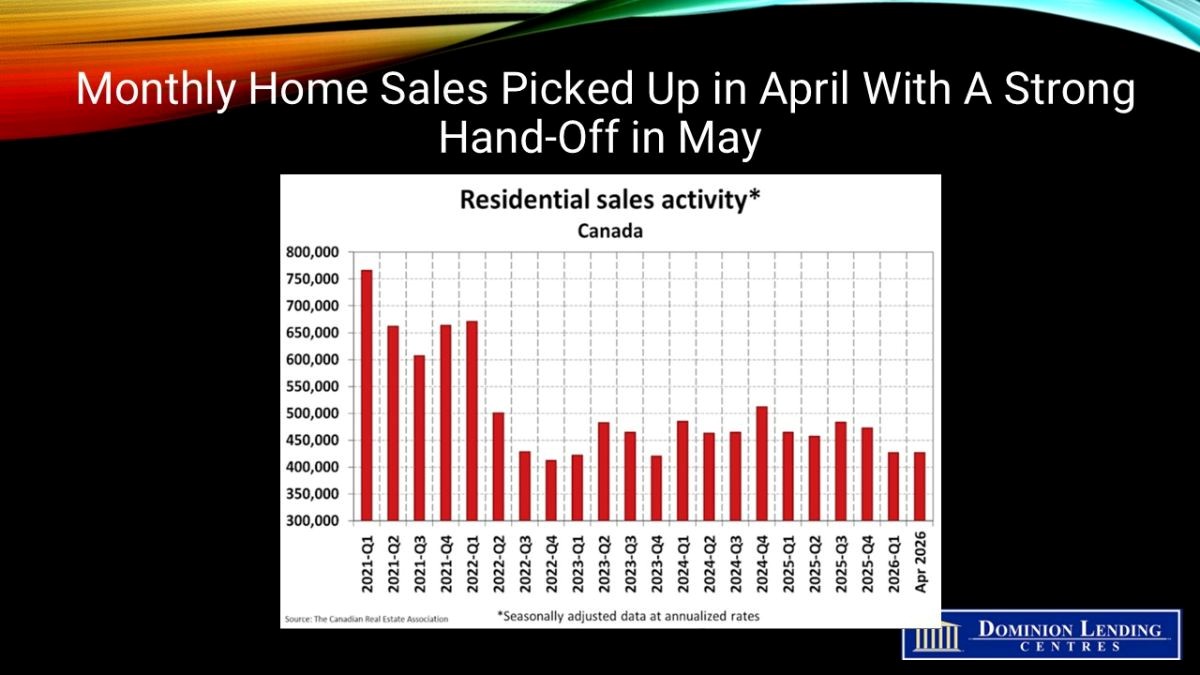
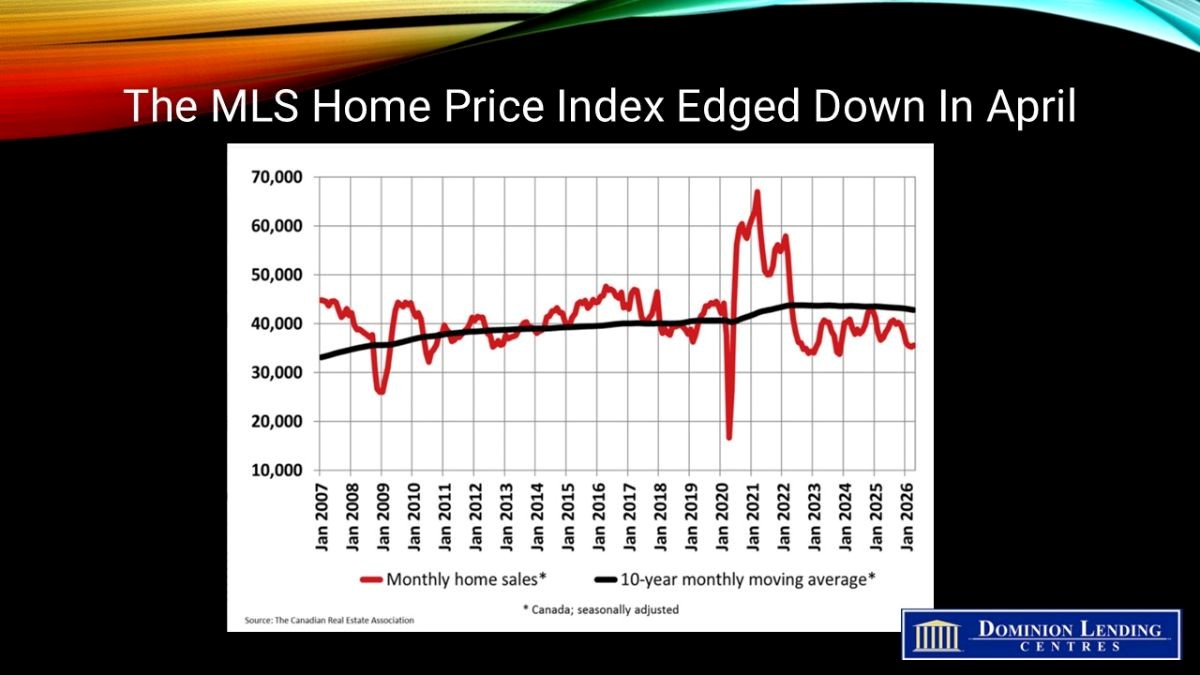
The number of home sales recorded on Canadian MLS® Systems was up 0.7% month over month in April 2026. According to Shaun Cathcart, Senior Economist with the Canadian Real Estate Association (CREA), “While home sales were up only modestly from March to April, the small increase reflected a slow start to the month with a stronger handoff into May, alongside falling days on the market and stabilizing prices. This latest bout of global economic uncertainty and higher mortgage rates suggests the previously expected rebound in housing markets this year will remain muted. Still, it does not mean there will be no upward momentum at all.” Indeed, housing activity appears to be improving despite the war in Iran.
New Listings
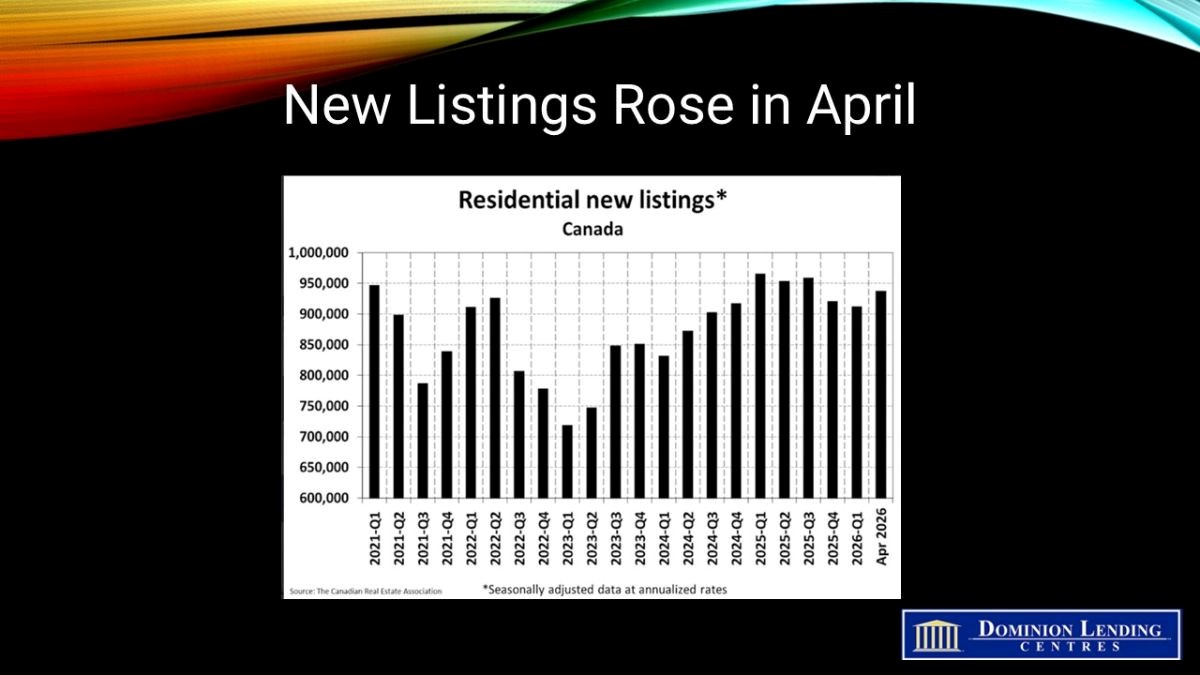
New listings jumped 4.1% month-over-month in April, marking the traditional starting point for the spring market.
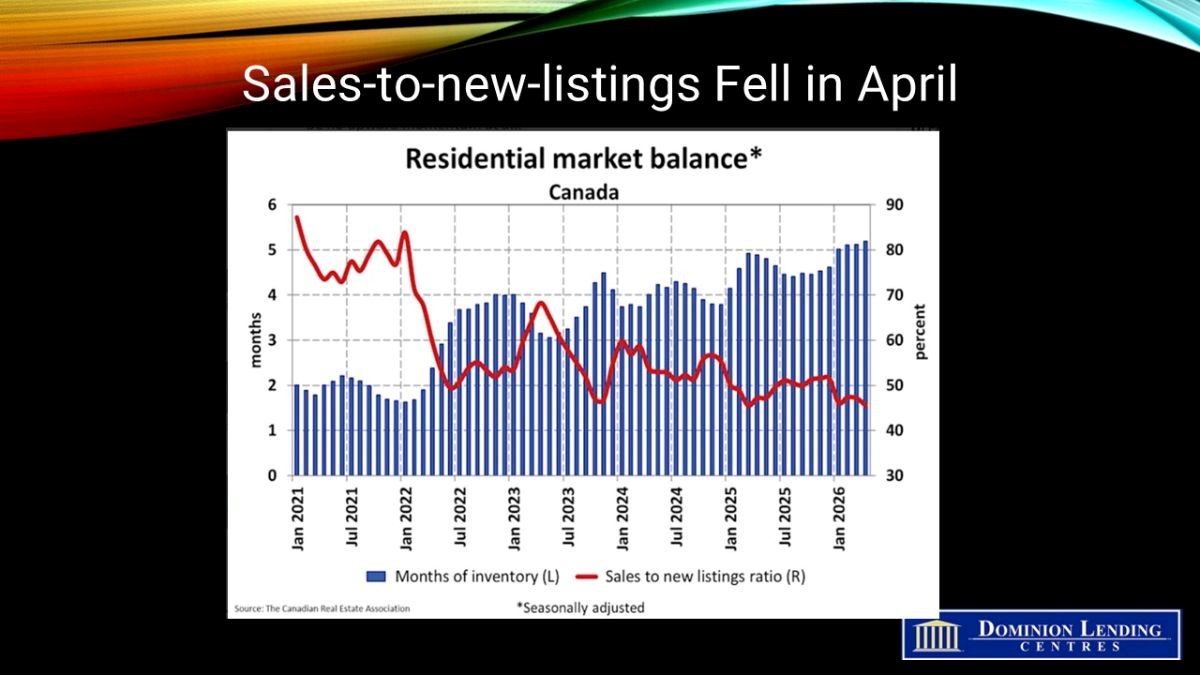
With the gain in new supply outpacing sales within the month of April, the national sales-to-new listings ratio eased to 45.6% compared to 47.1% in March. That said, this could reflect a timing issue between when properties are listed and when they eventually sell. The long-term average for the national sales-to-new listings ratio is 54.8%, with readings generally between 45% and 65% that are consistent with balanced housing market conditions.
There were 187,647 properties listed for sale on all Canadian MLS® Systems at the end of April 2026, up 2.2% from a year earlier but 6.1% below the long-term average for that time of the year.
There were 5.2 months of inventory nationwide at the end of April 2026, up slightly from February and March, driven by the influx of new spring listings. This remains very close to the long-term average for the five-month measure. Based on one standard deviation above and below that long-term average, a seller’s market would be below 3.6 months, and a buyer’s market would be above 6.4 months.
Home Prices
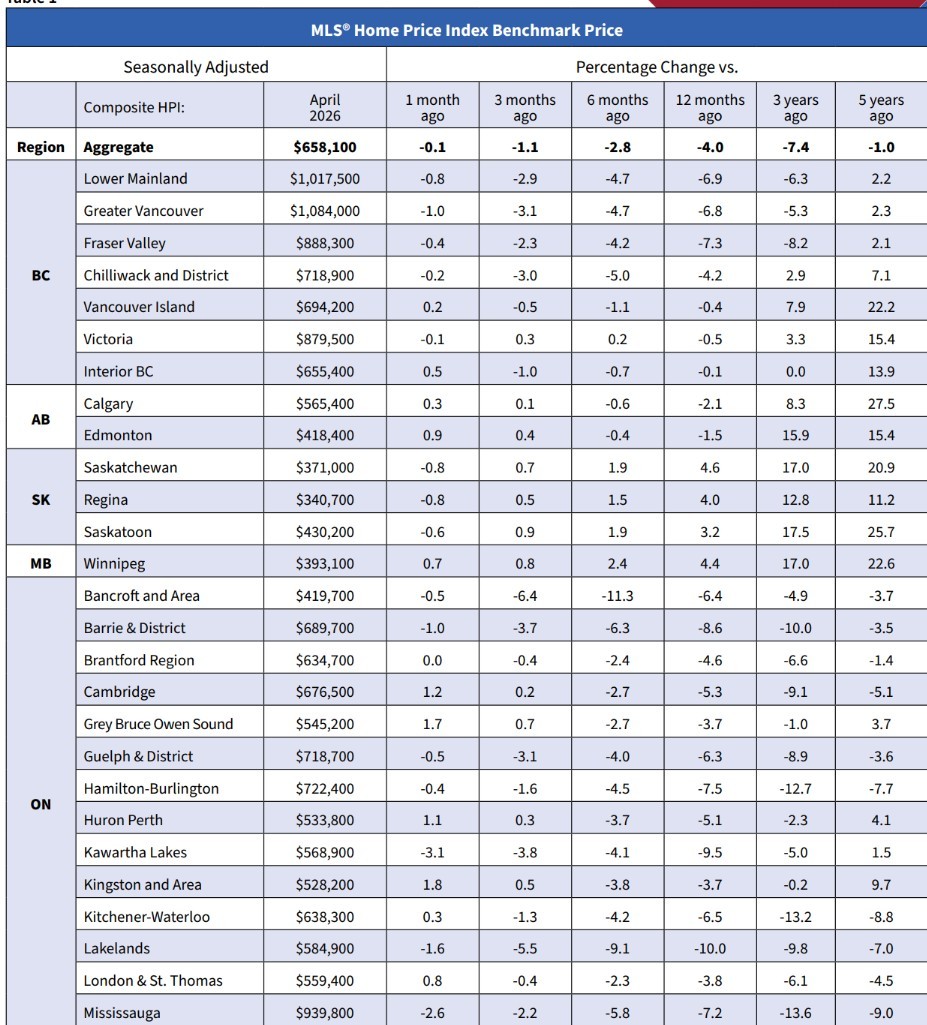
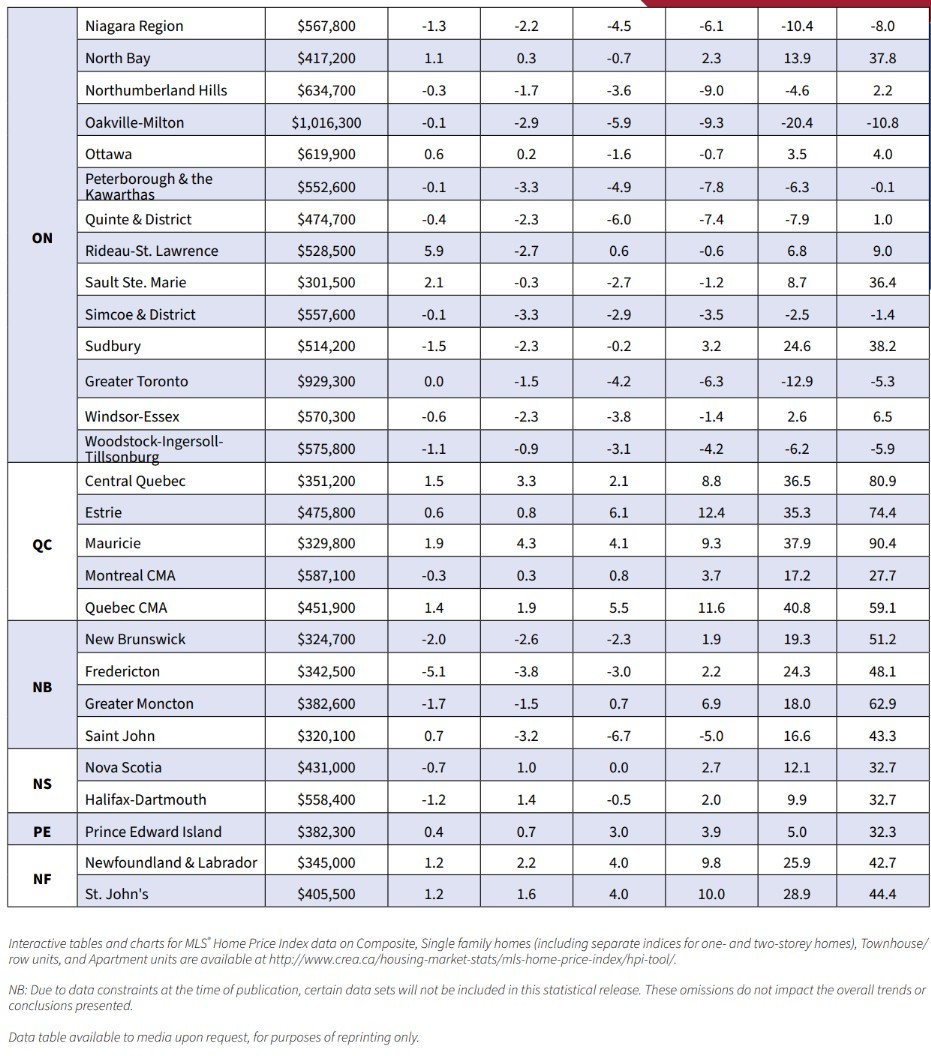
In April, the National Composite MLS® Home Price Index (HPI) experienced a slight decrease of just 0.1% on a month-over-month basis, marking the smallest decline since October 2025. This trend corresponds with tightening sale-to-list price ratios and a reduction in days on the market in recent months. Price stabilization is a crucial milestone that could encourage buyers to re-enter the market in greater numbers.
On a year-over-year basis, the non-seasonally adjusted National Composite MLS® HPI dropped by 4.2% compared to April 2025, which is the smallest decline recorded in 2026 so far.
Bottom Line
With geopolitical tensions mounting and the tenuous ceasefire in Iran, some potential homebuyers have postponed their purchase decisions. While there remains considerable pent-up demand, and home prices in many regions have fallen sharply, especially in Ontario, which was hardest hit by the tariffs last year, along with the ongoing condo supply glut. These issues are unlikely to be resolved in the near term, so housing market weakness will remain a drag on overall economic activity.
Compounding these concerns is the surge in oil prices. Gasoline prices–a very visible component of consumer spending–have skyrocketed, causing supply disruptions in nitrogen fertilizer, plastics, aluminum and helium. Price pressures will no doubt mount, leading central banks to be concerned about potential stagflation.
Next Monday, we will see the CPI data for March. At this point, the Bank of Canada is likely to continue to “look through” the price pressures, hoping the war will end very soon.
Following the worse-than-expected US inflation data, the Canadian CPI for April will be released on May 29. If it confirms the 3.8% y/y US inflation, the Bank of Canada will seriously consider a 25 bps rate hike despite weakness in the labour market. The Bank is mindful of the negative impact of higher rates on already weak housing activity; this reduces the chances of a rate hike, but it cannot be ruled out. Among major advanced economies, central banks have already hiked interest rates in Japan, Norway and Australia. In contrast, the Fed, ECB, Bank of England, and Bank of Canada all cut rates in 2025 and have been on hold so far this year.
Judging from the recently released minutes of the last BoC meeting, the Governing Council seriously considered a rate hike at their April 29th meeting. It was a close call then, a harbinger of the central bank’s inflation concerns.